
When most people think about a sabbatical in Europe’s lovely southern regions, the same cities come to mind. Rome. Barcelona. Athens. Santorini. And to be honest, those places are incredible. But when you have weeks or months to actually settle into a place, the most-visited destinations in Europe aren’t always the best.
Southern Europe is enormous, historically rich, and home to dozens of destinations that remain beautifully under the radar. For someone taking a career break or sabbatical trip, the lesser-known spots give you exactly what the bucket-list cities can’t: space to think, genuine local culture, and the kind of slow rhythm that actually lets you decompress.
Here are four Southern European sabbatical destinations that deserve a spot at the top of your list.
Table of Contents
- Sicily, Italy
- Sarandë, Albania
- Thessaloniki, Greece
- Cyprus
- So Why Southern Europe?
Sicily, Italy
Imagine waking up with no agenda and wandering into a street market that has been running in the same spot for centuries. You pick up some local cheese, some olives, a bottle of wine you’ve never heard of, and spend the afternoon eating on a hillside overlooking the Mediterranean. That’s a Tuesday in Sicily.
Italy is one of the most visited countries in the world, but the vast majority of travelers never make it past Rome, Florence, and the Amalfi Coast. Sicily exists in a world entirely its own. The largest island in the Mediterranean, it carries the fingerprints of every civilization that ever passed through: Greeks, Romans, Arabs, Normans, the Spanish. You feel it in the food, the architecture, and the pace of daily life in a way that is genuinely hard to find anywhere else.
For sabbatical travelers, Sicily hits a rare sweet spot. The cost of living is low by Western European standards, the food is extraordinary, and life moves slowly enough that you actually start to feel it. Long lunches stretch into afternoon rest. Evenings drift into the night over wine and conversation. Give it two weeks and you’ll stop checking your phone at dinner.
What to Do in Sicily:
– Hike up Mount Etna at sunrise
– Wander the baroque streets of Noto and Ragusa Ibla
– Explore the ancient Greek ruins at Agrigento’s Valley of the Temples
– Swim the crystal waters off the Egadi Islands
– Get completely lost in Palermo’s Ballarò market
Sarandë, Albania
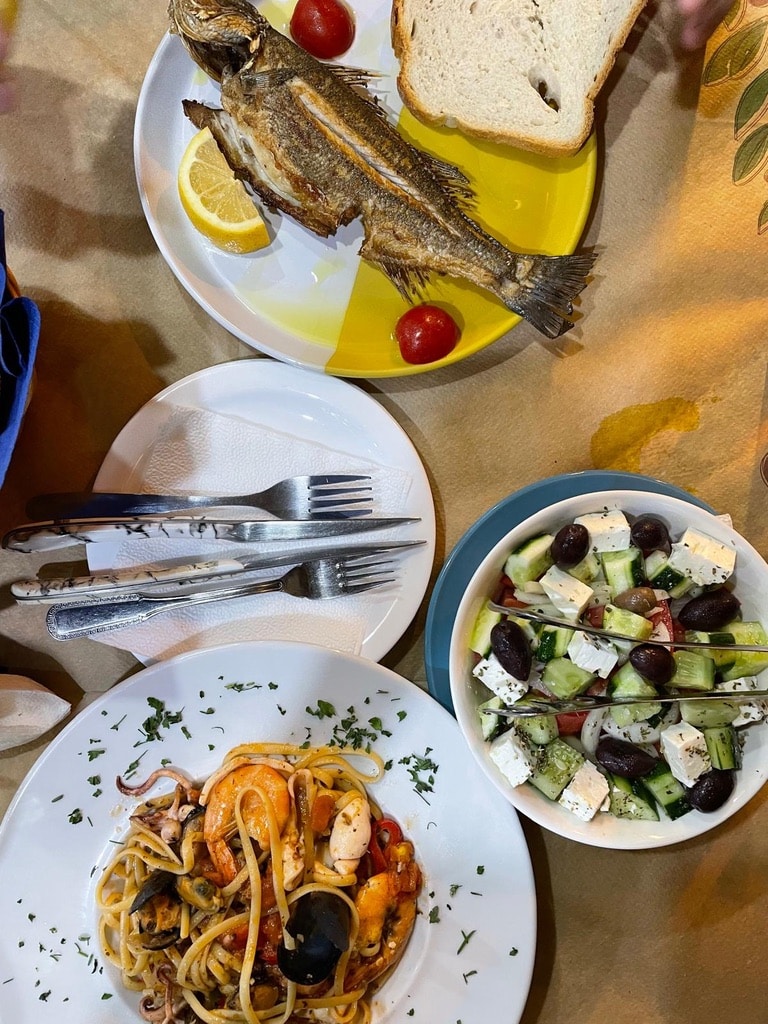
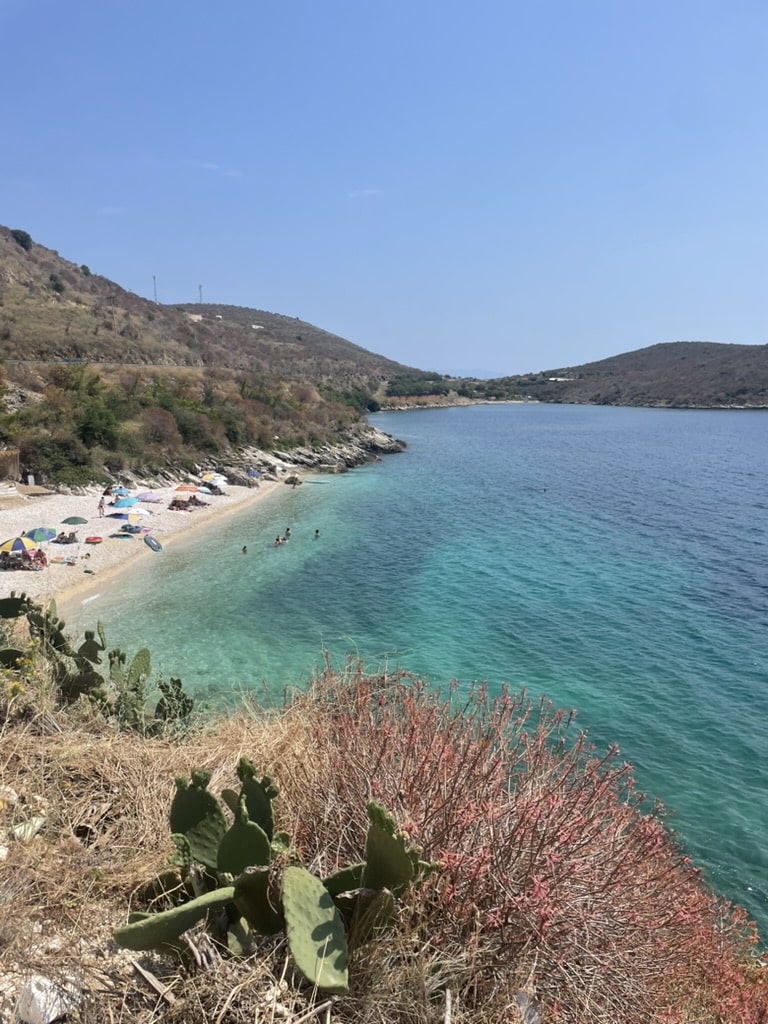
Picture this: you’re sitting at a waterfront cafe on the Albanian Riviera. The water in front of you is an almost unreal shade of turquoise. Across the strait you can see the Greek island of Corfu. Your coffee and byrek costs about $1.50. Almost nobody around you is a tourist and the owner befriended you and offered you a breakfast shot of raki. The vibes of Sarandë are hard to beat.
Albania spent most of the 20th century as one of the most isolated countries in the world, and that isolation preserved a lot. The coastline was never developed the way much of the Mediterranean was. The hilltop villages above the Riviera are virtually untouched. And the locals, perhaps because mass tourism is still relatively new here, are genuinely and warmly welcoming in a way that feels rare. The only way not to befriend a local in Albania is by hiding inside a hotel.
Your sabbatical budget will go significantly further here than in Italy or Greece. The infrastructure is not yet seamless, but that rough-around-the-edges quality is part of what makes it so compelling. This is a place that still feels discovered rather than packaged, and for people who are burnt out and are tired of the polished and the predictable, that is exactly the point.
What to Do in Sarandë and the Albanian Riviera:
– Explore the ancient ruins of Butrint National Park
– Swim at Ksamil Beach, one of the Mediterranean’s most beautiful stretches
– Take a day trip to Corfu by ferry
– Visit the Blue Eye natural spring
– Hike the hillside villages above the Riviera
Thessaloniki, Greece
Forget everything you think you know about Greece and imagine instead you’re sitting at a covered market stall in northern Greece, eating what locals will confidently tell you is the best food in the country. Later you walk along a waterfront promenade as the sun sets over the gulf. Tomorrow you’re thinking about driving two hours to hike Mount Olympus.
Greece’s second city has a young, creative energy, a layered history that spans Greek, Roman, Byzantine, Ottoman, and Jewish chapters, and a food scene that Greeks from Athens will quietly admit is better than their own. For European sabbatical travelers who want a genuine city base with extraordinary nature on the doorstep, it is nearly unbeatable. And it costs a fraction of what Athens has crept up to.
What to Do in Thessaloniki:
– Climb the Byzantine walls for panoramic views over the city
– Eat your way through the Modiano and Kapani covered markets
– Hike to the summit of Mount Olympus
– Spend a long weekend on the Chalkidiki Peninsula
– Explore the Byzantine mosaics at the Rotunda and Hagia Sophia
Cyprus
In Cyprus you can start your day hiking a coastal trail above the Mediterranean, stopping at a viewpoint with nothing around you but sea and scrubland. In the afternoon you drive up into the mountains, stop at a small family winery that’s been producing the same wine for generations, and stay for lunch because they insist. By evening you’re back at your apartment in a city where English is widely spoken, the infrastructure works, and the sun is still warm well into October.
Cyprus sits at a crossroads between Europe, the Middle East, and North Africa, and that position has given it a layered identity unlike anywhere else in the Mediterranean. Ancient ruins, Crusader castles, Byzantine churches, and Ottoman mosques all share the same island. The wine culture alone is worth the trip: Cyprus has been producing wine for over 5,000 years, with indigenous grape varieties that exist nowhere else on earth.
For professionals on a career break, the practical case for Cyprus is strong. English is widely spoken, the infrastructure is reliable, and it is one of the easiest places in Southern Europe to simply arrive and settle in. Add over 300 days of sunshine per year and mild winters, and it becomes a genuinely year-round option.
What to Do in Cyprus:
– Hike the Aphrodite Trail along the wild Akamas Peninsula coastline
– Visit the painted Byzantine churches of the Troodos Mountains
– Explore the ancient ruins of Kourion overlooking the sea
– Spend time in Nicosia, the world’s last divided capital
– Tour the family wine producers of the Commandaria wine region
So Why Southern Europe?
Southern Europe is perfect for the traveler who actually wants to slow down. These four destinations share something important: they are all places where the longer you stay, the more you get out of them. The best experiences are not ticketed attractions. They are the relationships you build, the rhythms you settle into, the afternoon you spend sitting at a harbor cafe with nowhere to be.
A well-planned sabbatical in Southern Europe can be one of the most restorative, perspective-shifting experiences of your professional life. The key is choosing the right destination for your goals and giving yourself enough time to actually arrive.